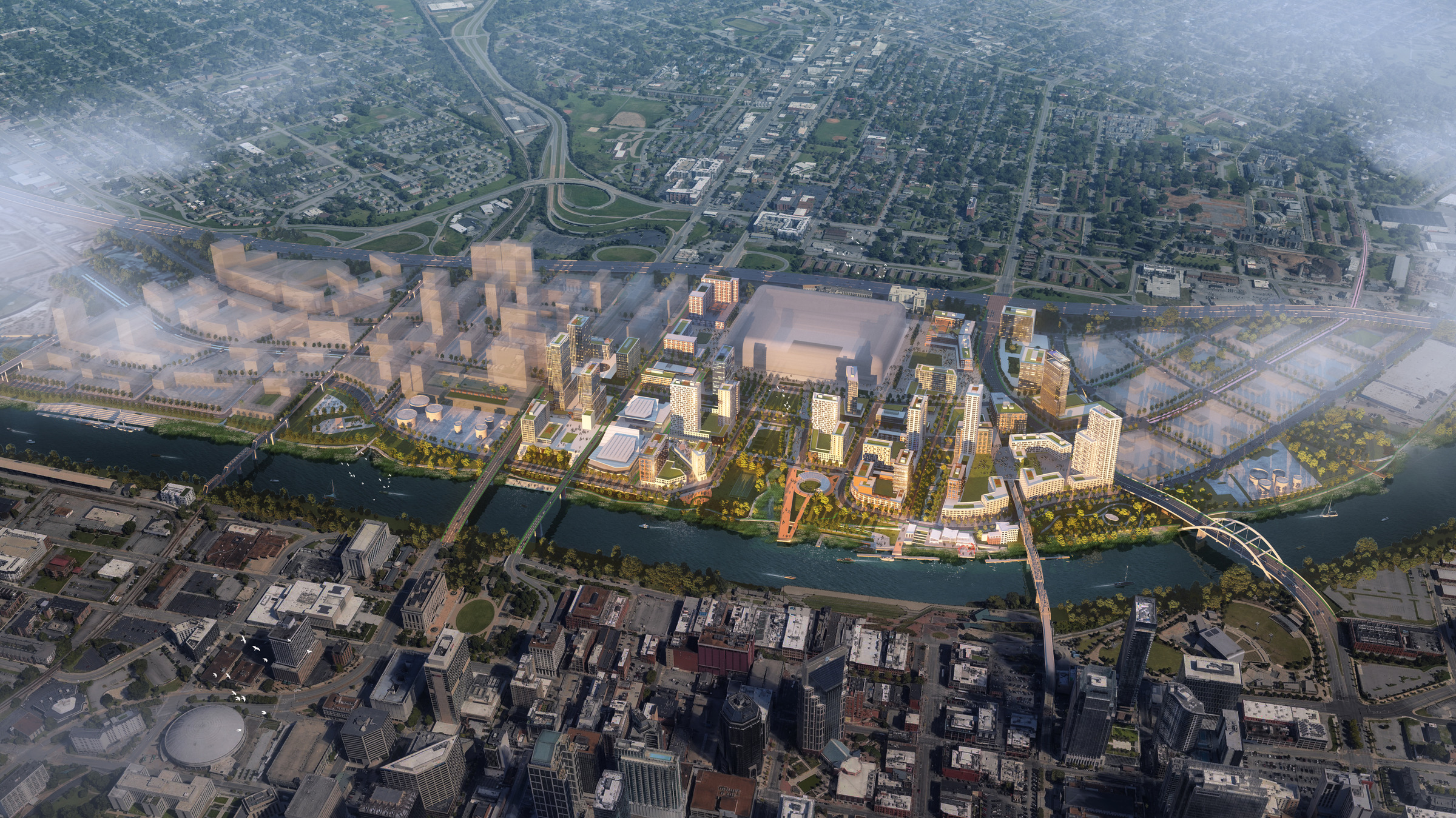
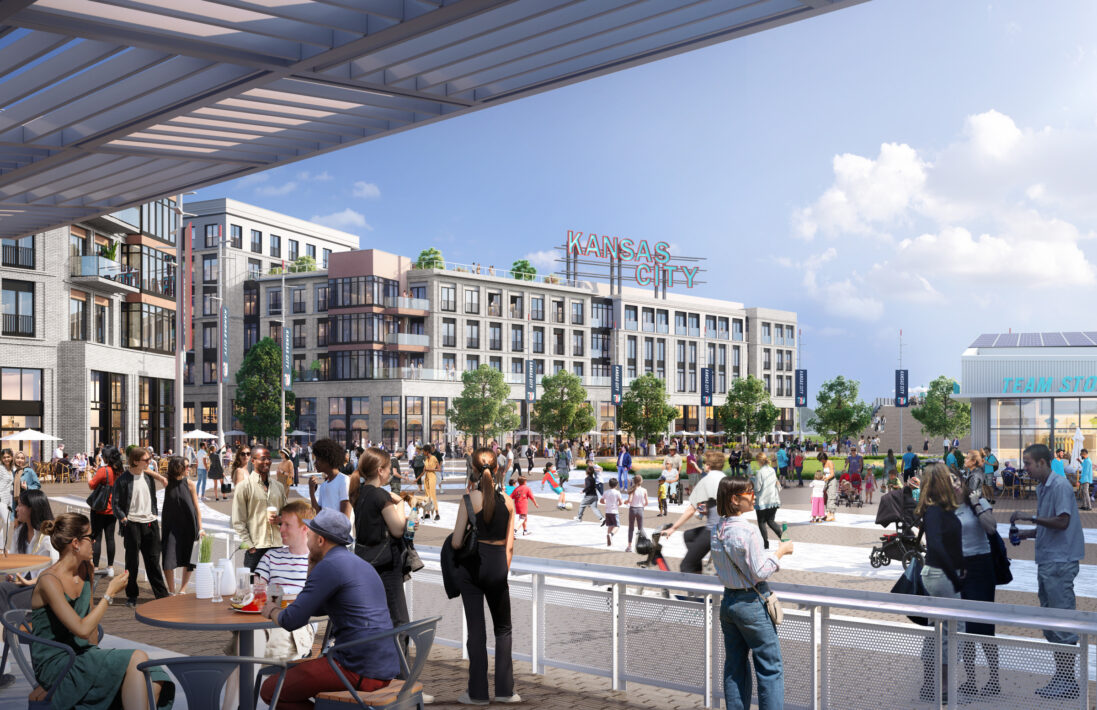
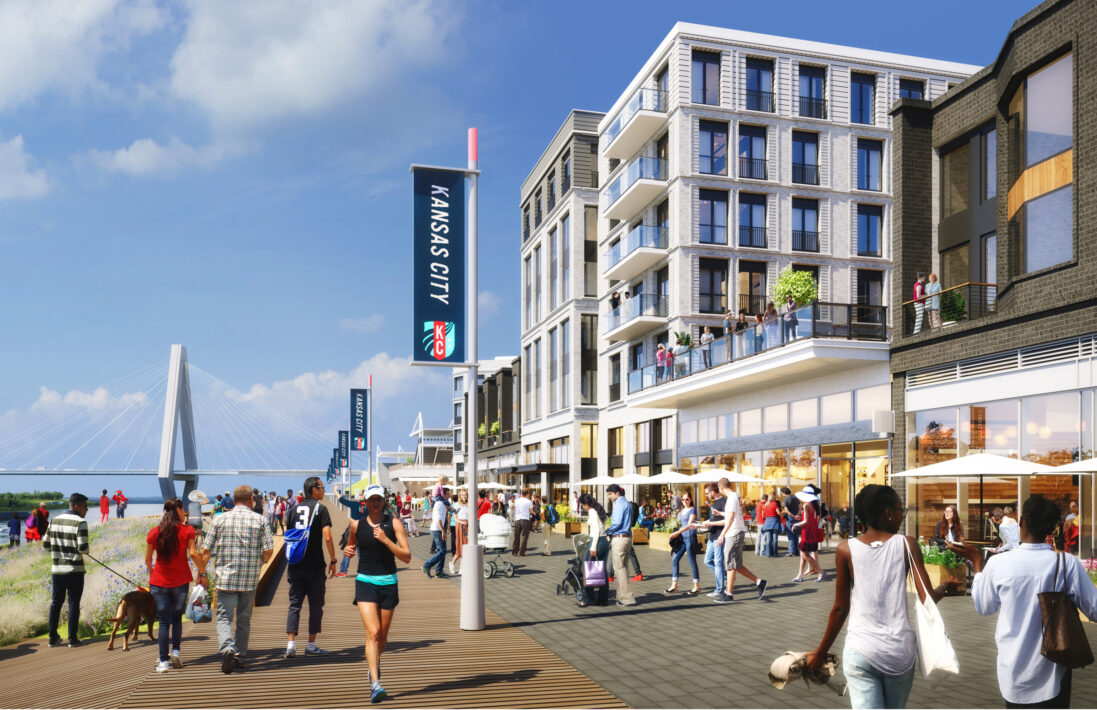
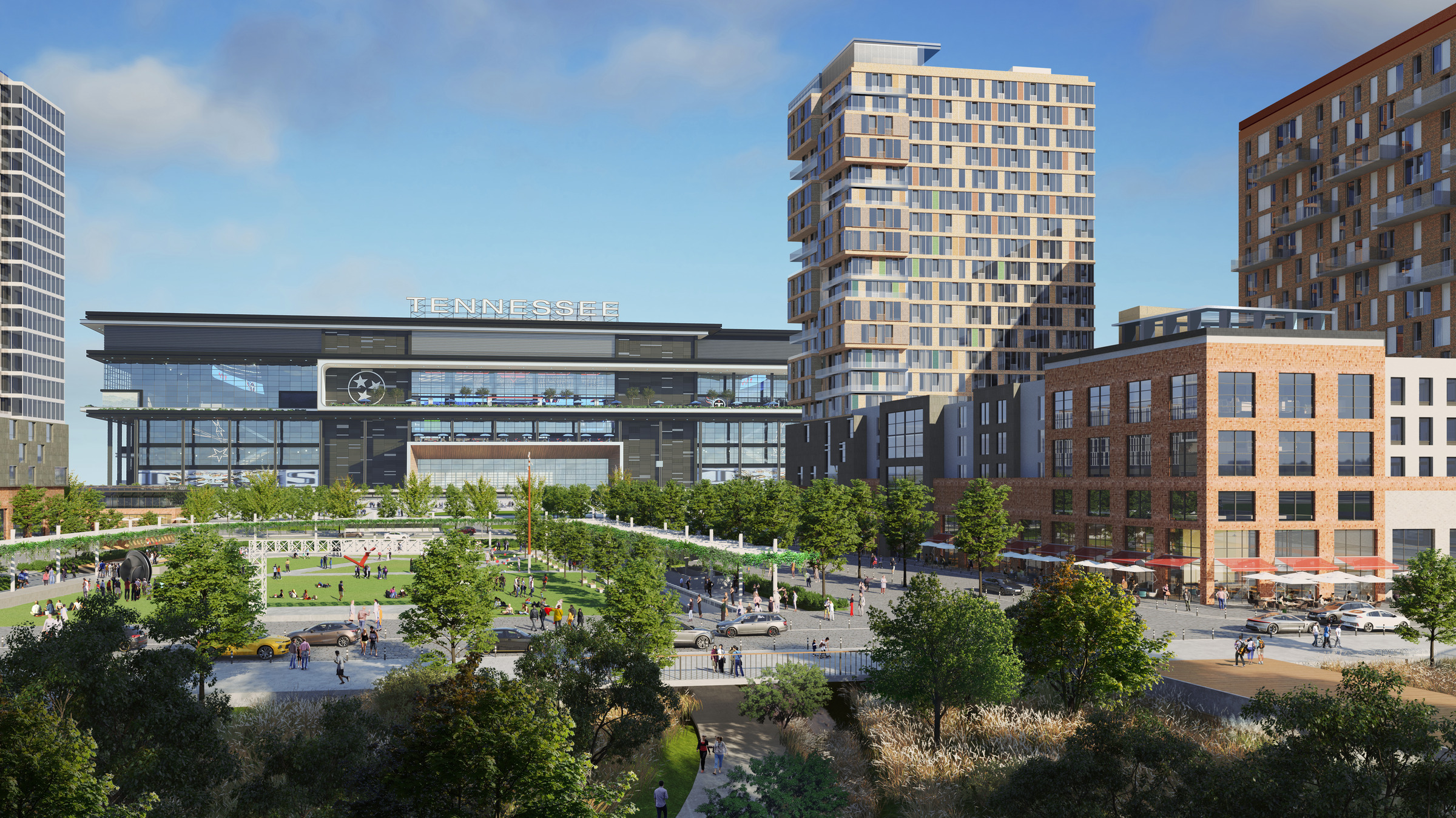
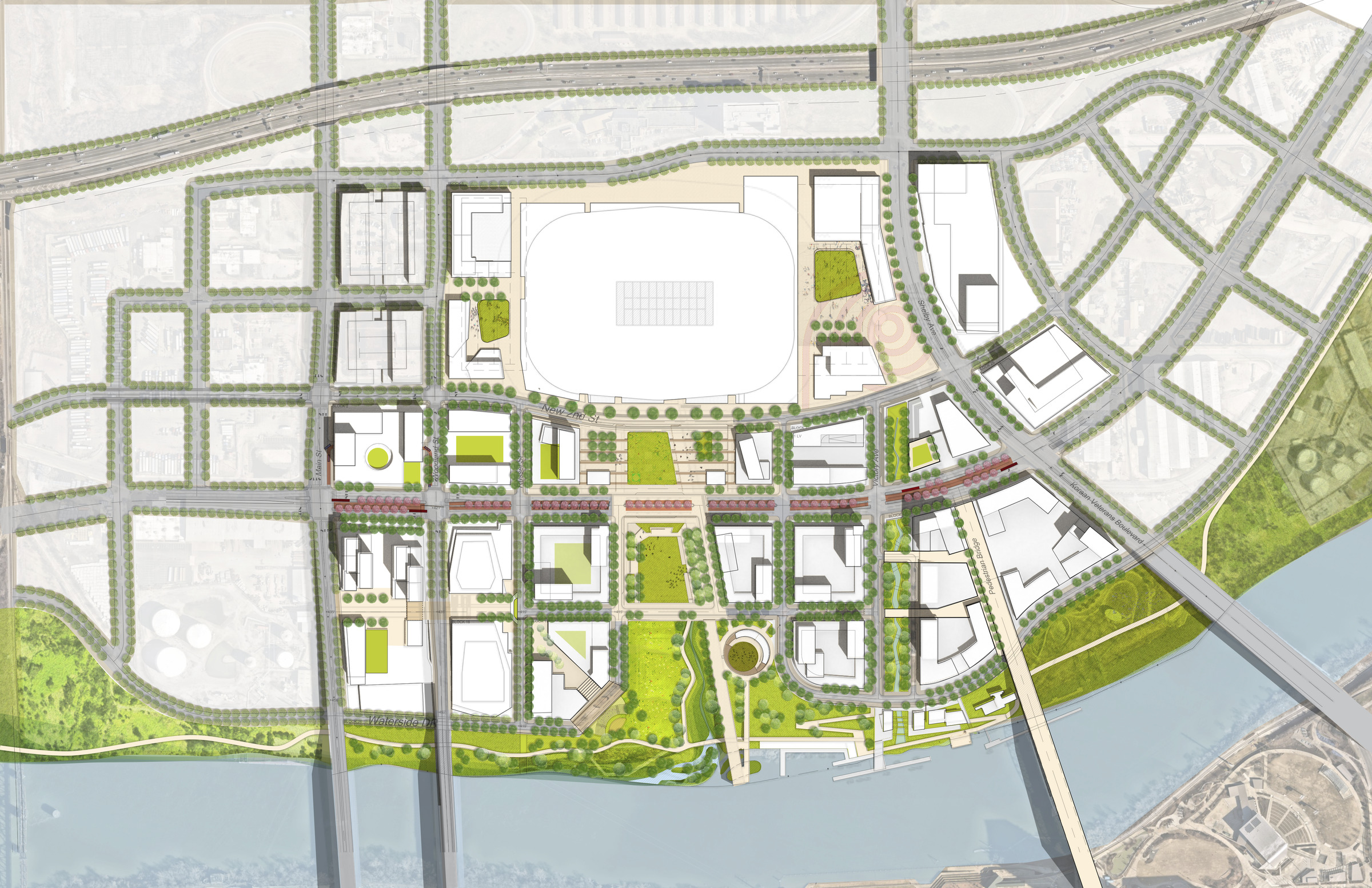
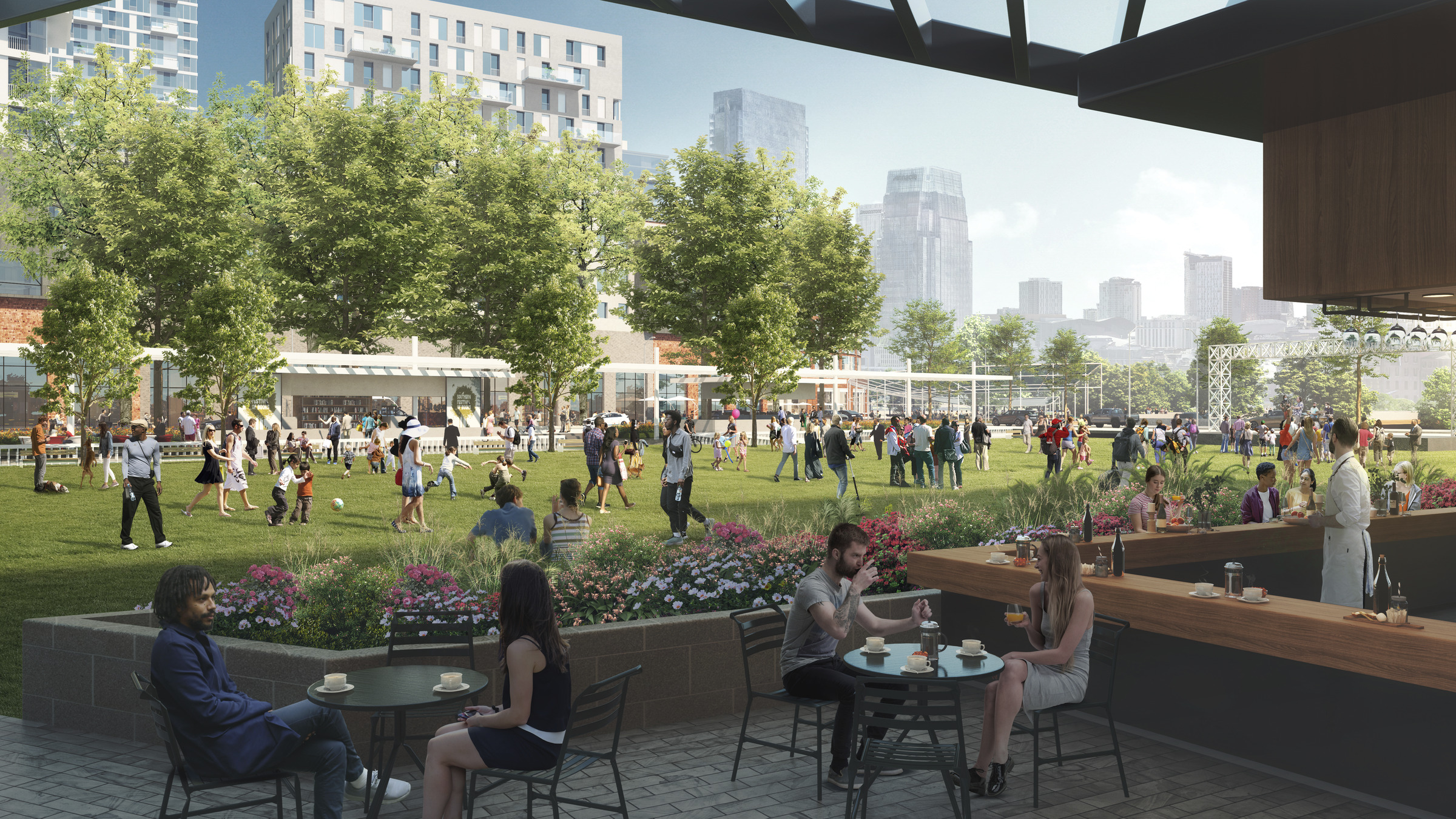
Fang praised the Titans’ leadership, and especially President and CEO Burke Nihill, for their openness to seeing beyond the surface lots where tailgating holds a sacred tradition for so many fans. The new plan will reimagine that tradition, offering green space, outdoor restaurants, and the stadium’s own terraces and amenities for fans to celebrate both before and after games. “They had a very progressive vision and outlook,” Fang says.
“Vibrant Urban Ecosystems”
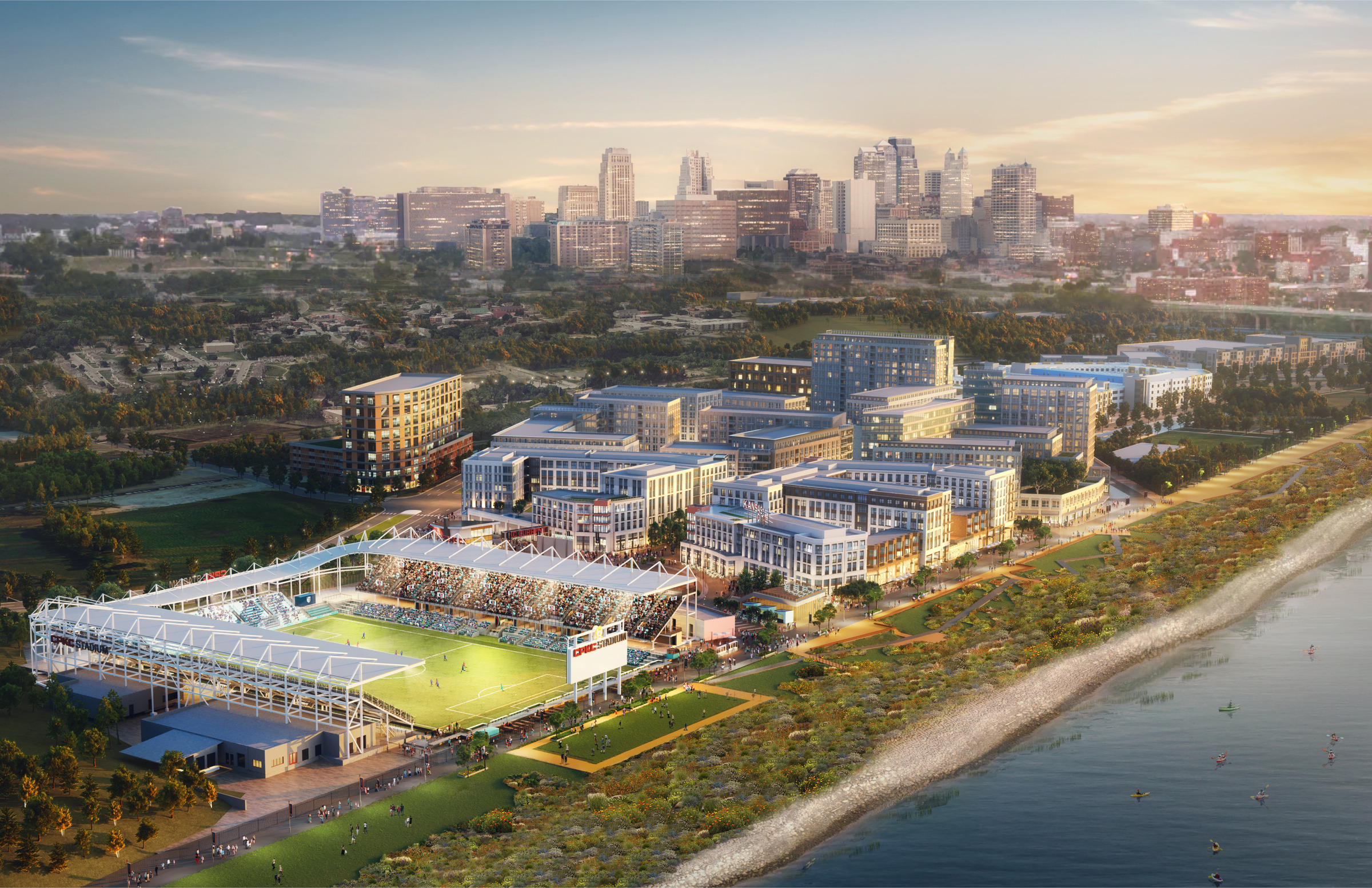
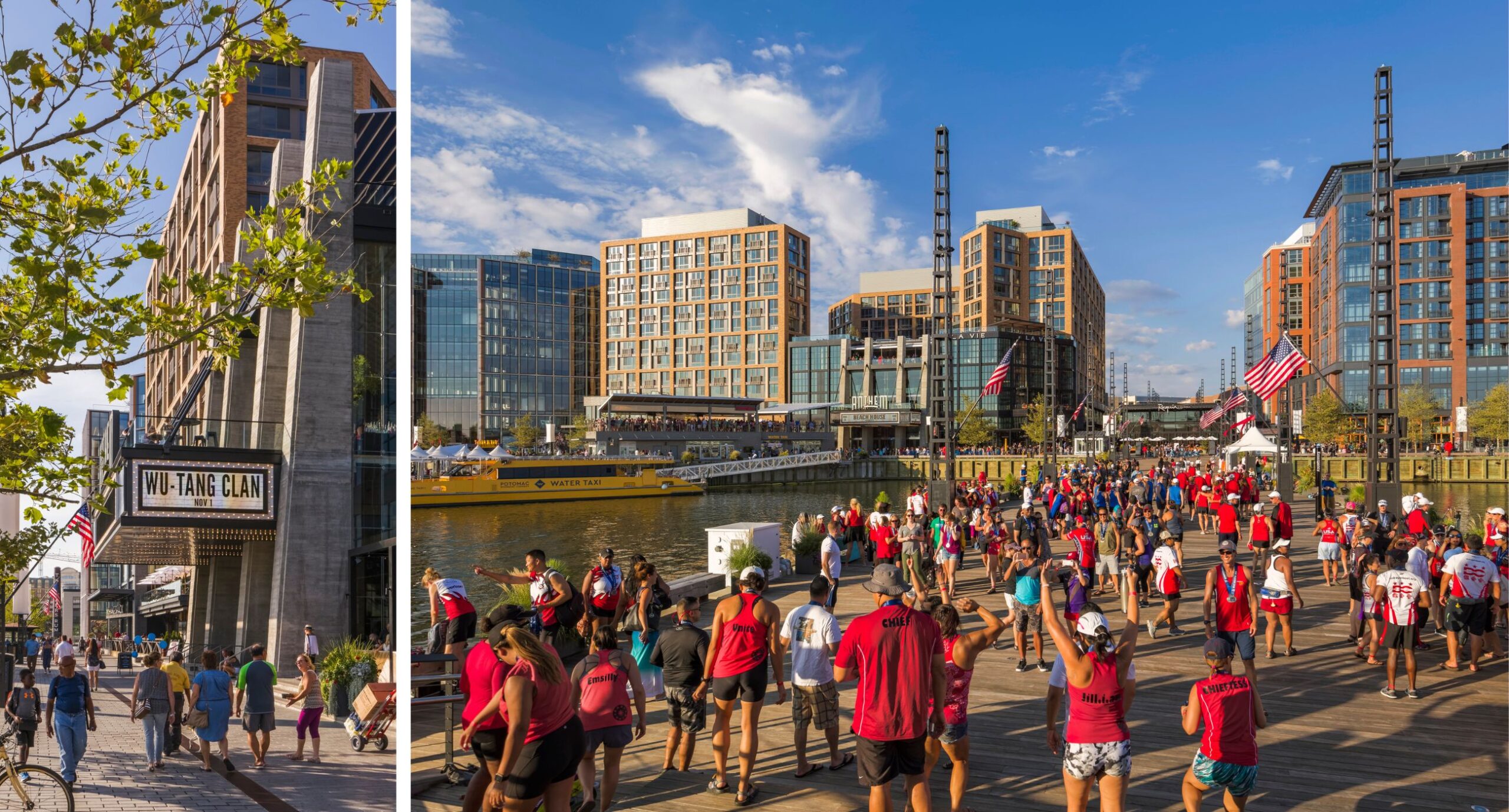
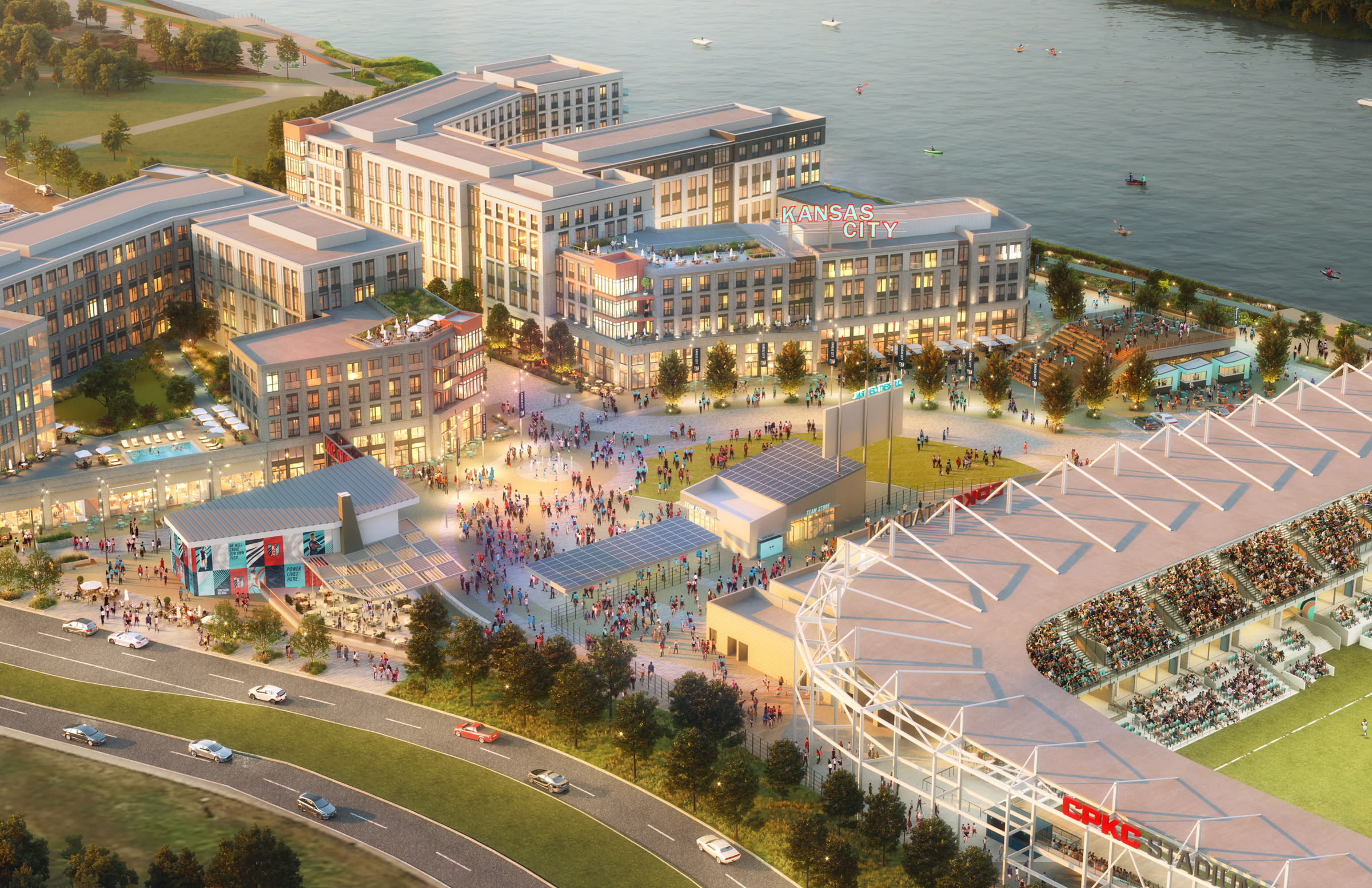
The stadium districts taking shape in Kansas City and Nashville are emblematic of a larger trend occurring nationwide, according to the real estate consulting firm RCLCO. The firm created a venue-anchored development tracker that follows mixed-use development linked to stadiums across the nation’s professional baseball, football, basketball, hockey, and soccer leagues. There are currently 43 already built, with seven under construction and 34 more planned. “We are seeing a burst in development interest around sports venues and stadiums, as teams and owners seek to diversify and control future revenue streams, as well as enhance the fan experience and deliver local community benefits,” said Erin Talkington, Managing Director of RCLCO. In a separate analysis, the sports branding firm Athelo Group wrote that “gone are the days when stadiums are arenas stood alone. These venues have now blossomed into vibrant urban ecosystems, incorporating a diverse range of amenities like hotels, bars, retail outlets, entertainment venues, and residential developments.”